
Blog
7 Costly Mistakes to Avoid When Buying a Racing Jacket

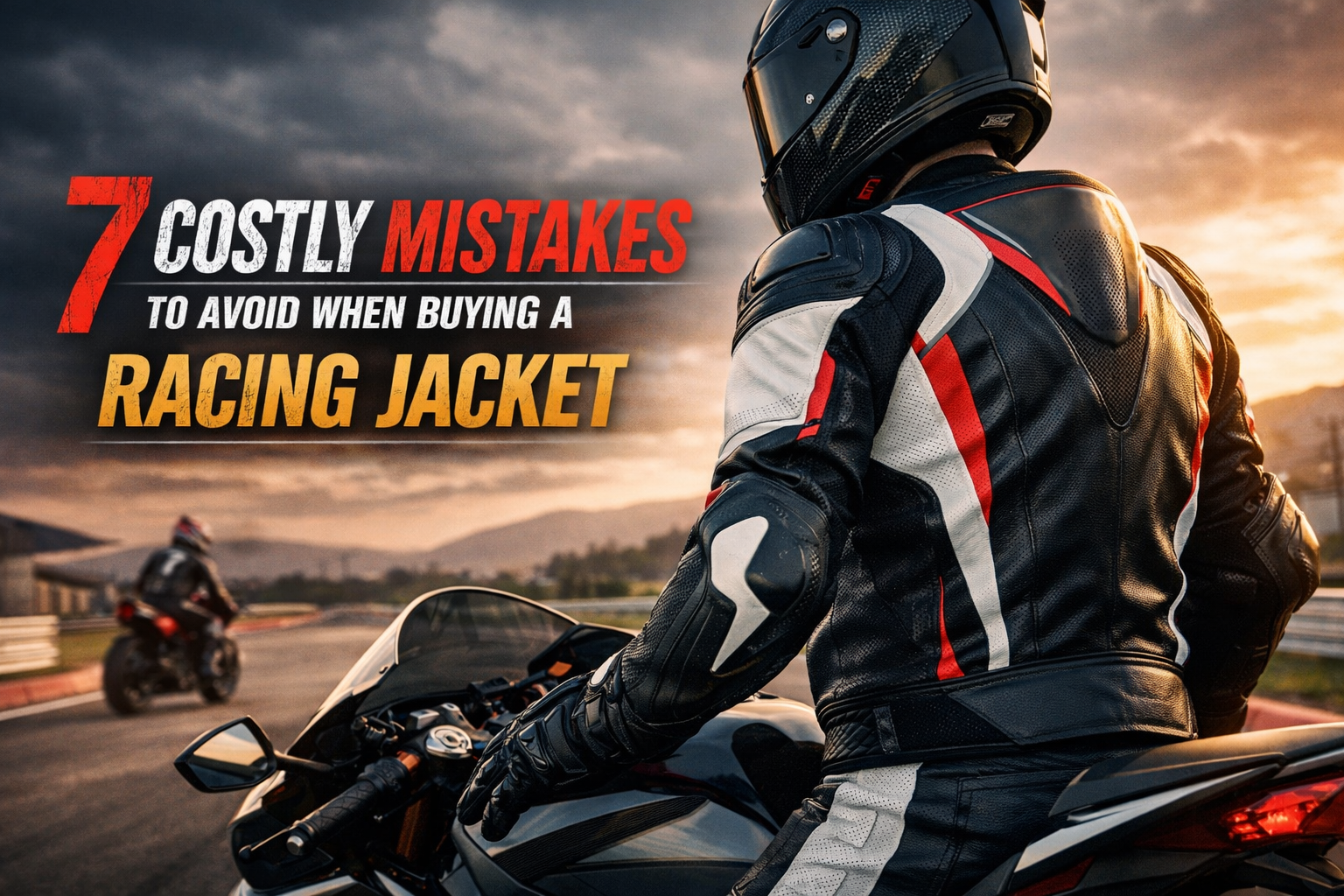
A racing jacket is not apparel in the conventional sense. It is a protective system designed to manage abrasion, control impact energy, and maintain structural integrity during high-speed incidents. Most riders overpay not because they choose the wrong price point, but because they misunderstand how these systems actually work.
In real-world crashes, jacket failure rarely comes from dramatic leather blowouts. It usually starts with predictable weaknesses: seams opening under load, armor rotating out of position, or panels stretching beyond their design limits. These failures are not random—they are the result of incorrect buying assumptions.
Many riders evaluate racing jackets as upgraded street jackets with aggressive styling. In practice, racing-specific garments are engineered around posture, speed, and crash dynamics that are fundamentally different from casual riding. This guide breaks down the seven most expensive mistakes riders make when buying a racing jacket and explains how to avoid them by understanding construction, materials, and functional design rather than appearances.
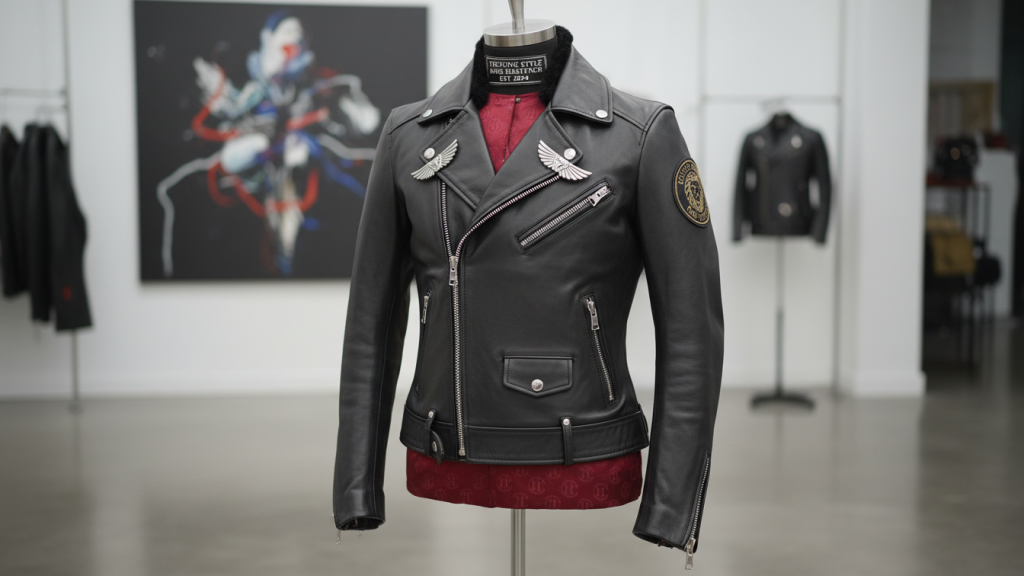
Mistake #1: Choosing Style or Brand Prestige Over Protective Architecture
Visual design is often mistaken for protection. Sharp lines, external sliders, and race-inspired graphics create confidence, but none of these elements define how a jacket behaves when it contacts asphalt.
Protection begins with how the jacket manages forces across impact zones, where the body is most likely to strike the ground. These areas must remain uninterrupted by unnecessary seams. Poor seam placement introduces stress concentrations that can fail early during a slide. Likewise, a fragmented panel layout breaks load paths that should otherwise distribute abrasion forces across larger surface areas.
From an engineering standpoint, a racing jacket should behave as a continuous shell during a crash. Load must travel through the leather panels and stitching without encountering weak transitions. When design decisions prioritize visual segmentation over structural continuity, the jacket becomes vulnerable regardless of brand reputation or styling cues.
The mistake here is assuming that a jacket that looks fast is built to survive speed. Protective architecture is invisible unless you know what to inspect.
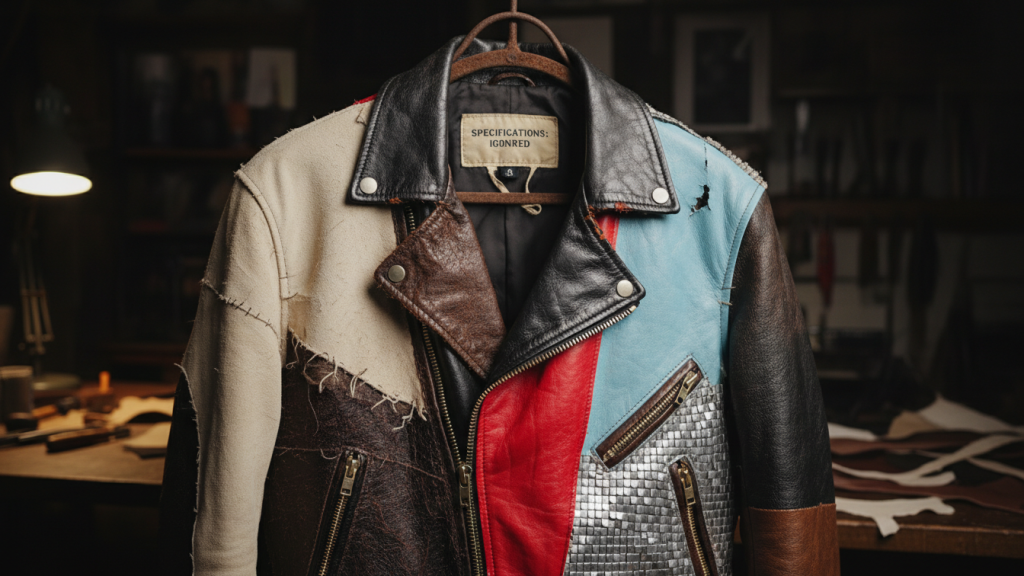
Mistake #2: Ignoring Leather Type and Thickness Specifications
Leather is often treated as a generic material, but its performance varies dramatically based on hide selection, fiber structure, and processing method. This mistake is costly because leather is the primary abrasion-bearing component of a racing jacket.
Full-grain cowhide is commonly used because it offers a balance of durability and consistency. Horsehide, by contrast, has a denser fiber structure that resists tearing but can behave more rigidly under impact. Neither is inherently superior unless matched correctly to jacket design and rider use.
Equally critical is leather thickness. Racing jackets typically operate within a narrow thickness window that balances abrasion time against mobility and heat buildup. Too thin, and the hide overheats and fails during prolonged slides. Too thick, and the jacket resists conforming to the body, increasing stress at seams and armor pockets.
Tanning methods further influence performance. Fiber bonding, oil content, and finish treatments affect how leather responds to friction-generated heat. Riders who ignore these specifications often end up with jackets that feel premium but fail to perform when subjected to real crash forces.

Mistake #3: Buying the Wrong Fit for Riding Posture
Static fit assessment—standing upright in a showroom—is one of the most misleading ways to evaluate a racing jacket. These garments are designed around a forward-leaning posture, where the spine is flexed, shoulders are rotated, and arms are extended.
Key patterning features such as pre-curved sleeves reduce material tension at the elbows during riding. Rotated arm panels align the sleeve axis with the natural grip position on the bars. When these elements are absent or incorrectly sized, the jacket fights the rider’s posture.
The most dangerous consequence of poor fit is armor migration. If the shell is under constant tension while riding, impact protectors shift away from joints before a crash even occurs. A jacket that feels comfortable while standing can leave elbows or shoulders partially exposed once the rider is tucked.
Proper fit evaluation must be done on the motorcycle or in a simulated riding position. Any assessment that ignores posture is functionally incomplete.
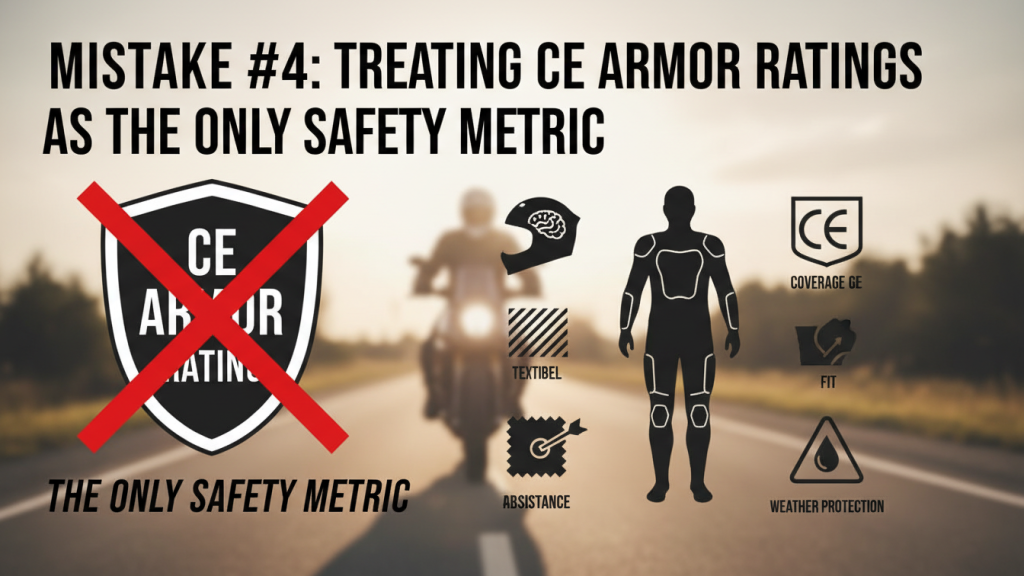
Mistake #4: Treating CE Armor Ratings as the Only Safety Metric
Armor certification is important, but it is only one component of a larger protective system. A jacket equipped with CE Level 2 protectors can still fail if those protectors are not supported by the shell.
The problem lies in armor displacement. During a crash, the body does not strike the ground cleanly. It rotates, slides, and decelerates unevenly. If armor pockets stretch or shift, the protector no longer aligns with the joint it is meant to protect.
This misalignment disrupts energy transfer. Instead of impact energy being absorbed by the protector and distributed across the jacket, it is transmitted directly to the rider’s body. Shell stiffness, pocket geometry, and retention design all determine whether armor stays where it is needed.
Focusing solely on armor ratings ignores the fact that armor only works when the surrounding structure controls its position under load.
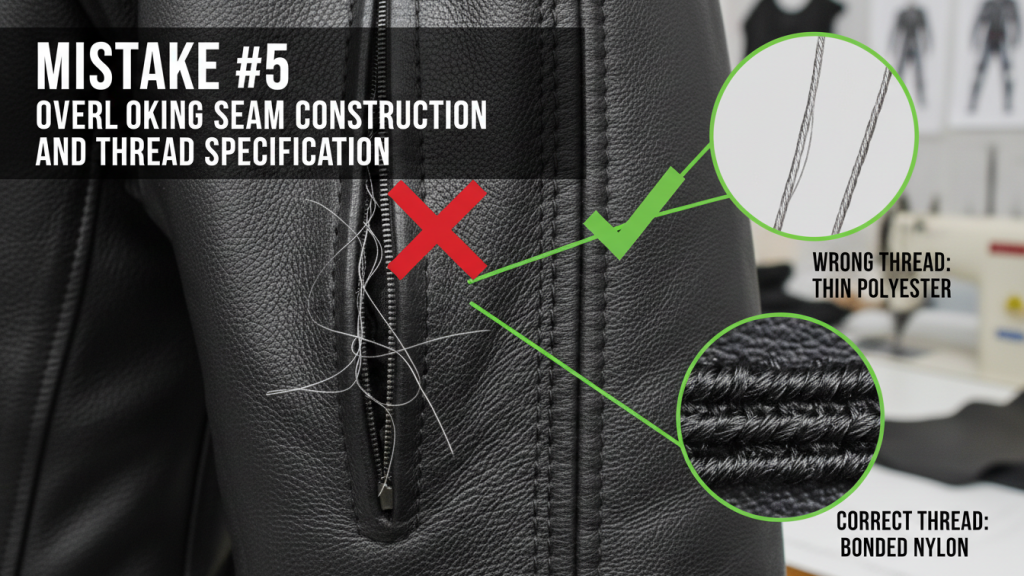
Mistake #5: Overlooking Seam Construction and Thread Specification
In most crash scenarios, leather does not fail first. Stitching does. Seams experience concentrated loads as panels attempt to separate under abrasion and tension.
High-risk areas rely on safety seams, which are designed to remain intact even if an outer stitch line wears through. The choice of bonded nylon thread matters because it resists heat degradation better than untreated alternatives when exposed to friction.
Equally important is stitch density. Too few stitches create long unsupported spans that unzip under load. Too many perforations weaken the leather edge itself. Racing jackets require a precise balance that accommodates both tensile and shear forces during a slide.
Riders rarely inspect seams, yet this is where catastrophic jacket failure most often begins.

Mistake #6: Assuming Ventilation and Perforation Are Always Beneficial
Airflow is often treated as a universal improvement, but it comes at a structural cost. Perforated leather removes material from the very surface responsible for resisting abrasion.
In a racing context, perforation must be controlled and strategically placed. Non-impact zones can accommodate airflow without compromising structural integrity. High-risk areas such as shoulders, elbows, and outer arms should prioritize material continuity.
The trade-off is simple: increasing airflow reduces abrasion resistance. Riders who prioritize cooling without understanding this balance often end up with jackets that perform well in comfort tests but poorly in crash scenarios.
Ventilation is a design decision, not a default upgrade.
Mistake #7: Buying a “Racing Jacket” Without Verifying Intended Use
The term “racing” is frequently applied to jackets that are not engineered for actual racing conditions. The distinction becomes clear when evaluating speed, posture, and crash expectations.
Jackets designed for track riding assume higher sustained speeds, aggressive lean angles, and longer slide distances. Those intended for aggressive street riding often compromise on leather weight and structural rigidity to improve comfort and versatility.
A key differentiator is garment stability—the jacket’s ability to maintain its shape and armor alignment during dynamic movement and impact. Jackets built primarily for street use may look similar but behave very differently once subjected to racing-level forces.
Failing to verify intended use leads to paying for aesthetics rather than performance.
How to Buy a Racing Jacket Correctly: Technical Buyer Checklist
- Confirm leather type, processing method, and specified thickness
- Inspect seam construction in high-risk areas
- Evaluate fit in a riding position, not standing upright
- Verify armor pocket retention and alignment under movement
- Identify perforation placement relative to impact exposure
- Match jacket design assumptions to actual riding environment
This checklist shifts the buying process from brand comparison to functional evaluation.
About Our Racing Jacket Engineering Standards
Our approach to racing jacket development is grounded in material testing, pattern refinement, and rider feedback under real riding conditions. Patterns are evaluated in dynamic postures, seams are tested for load tolerance, and materials are selected based on measured abrasion and heat behavior rather than marketing classifications.
This perspective comes from building and refining protective garments, not simply selling them. The goal is consistency of performance when conditions are least forgiving.