
Blog
Cleaning and Conditioning Your Leather Racing Jacket: A Complete Guide

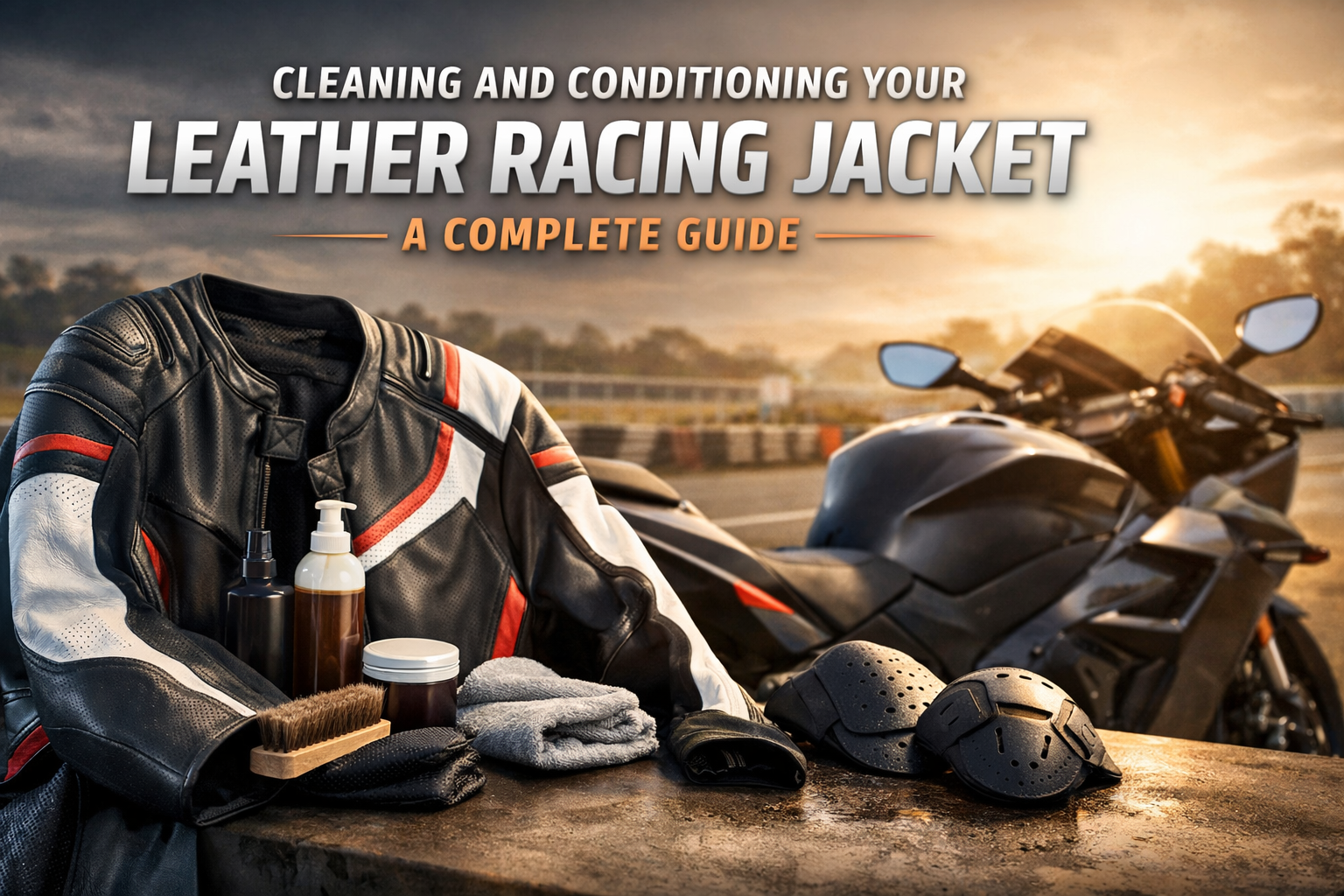
Protective motorcycle apparel is engineered around controlled material behavior under stress, not surface appearance. A leather racing jacket is built to manage slide energy, maintain seam stability, and keep protective components correctly positioned during an impact. These requirements demand a different care approach than casual leather garments.
Improper cleaning strips engineered finishes, disrupts fiber cohesion, and accelerates moisture intrusion. The result is a gradual but irreversible loss of abrasion resistance and tear strength, often without obvious cosmetic damage. Care methods must therefore prioritize material performance and structural longevity over visual softness or shine.
–
Understanding Your Jacket’s Leather Construction Before Cleaning
Racing jackets are typically manufactured from full-grain leather selected for uniform fiber density and predictable tensile behavior. Most high-performance garments use drum-dyed hides, allowing pigment penetration throughout the hide rather than relying on surface coatings that wear away unevenly.
Material thickness is carefully controlled, commonly within a hide thickness (1.2–1.4 mm) range, to balance flexibility with slide duration. Finishing treatments, perforation layouts, and stretch integration all influence how moisture and cleaning agents interact with the material. Understanding this construction is essential, because improper care alters how these elements function together under load.
What to Check Before You Clean (Pre-Inspection Protocol)
Before introducing any moisture or cleaning agent, a brief inspection helps prevent worsening existing damage. Focus on identifying conditions where cleaning should be postponed or professionally handled.
Check for:
- Surface cracking or abnormal stiffness
- Discoloration near seams or high-flex zones
- Uneven thinning on shoulders, elbows, or forearms
- Stitch separation or puckering around load-bearing panels
If structural degradation is present, cleaning can accelerate material failure rather than correct it.
How Often a Leather Racing Jacket Should Be Cleaned and Conditioned
Cleaning frequency should be determined by exposure, not by calendar intervals. Jackets used in hot conditions or sustained riding accumulate contaminants faster than lightly worn garments.
Surface cleaning removes external contamination, while conditioning addresses internal lubrication. Over-conditioning is a common error; excessive softening allows panels to deform and armor pockets to shift during riding. Maintenance should be minimal, deliberate, and responsive to actual material condition.
Approved Tools and Products for Care
Only tools designed for technical leather should be used, as inappropriate chemistry alters surface stability and breathability.
Approved essentials include:
- A pH-balanced leather cleaner to avoid stripping finishes
- Soft microfiber cloths to minimize friction
- Small detailing brushes for seams and junctions
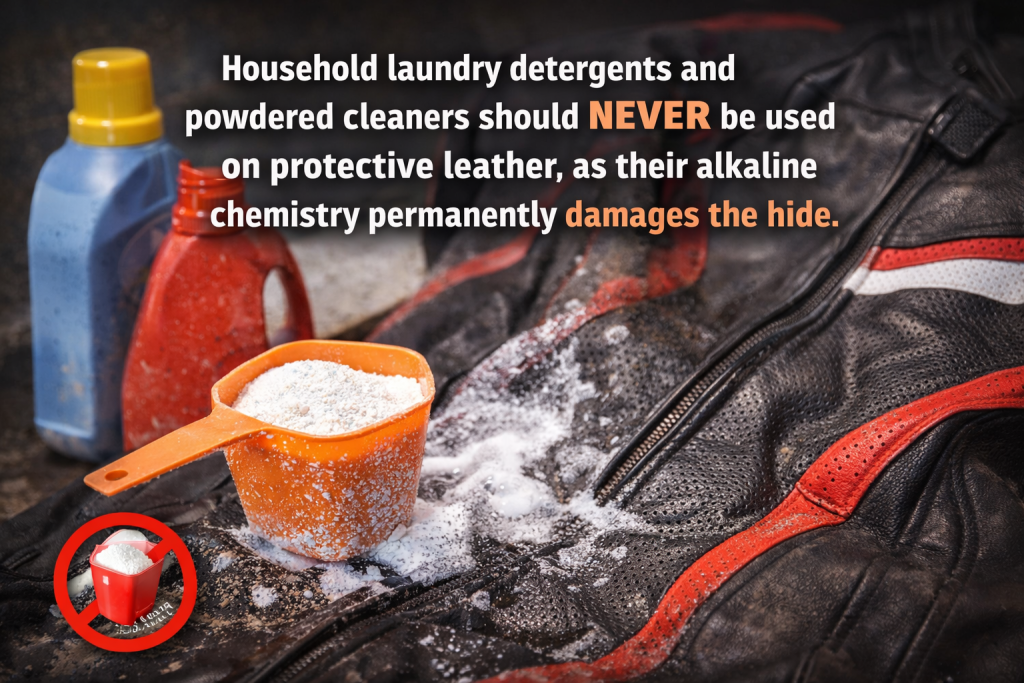
Avoid alcohol-based sprays, silicone treatments, petroleum oils, and household wipes. These products either dry the hide or leave residues that interfere with controlled leather behavior.
–
Step-by-Step: Proper Cleaning Process for a Leather Racing Jacket
Removing Armor and Internal Components
Always remove CE armor and detachable liners. Moisture trapped behind protectors dries unevenly and accelerates localized fiber fatigue.
Surface Dirt and Contaminant Removal
Begin with a dry wipe to remove loose debris. Apply cleaner sparingly to a damp cloth and work in controlled sections, allowing the cleaner to lift contaminants rather than scrubbing aggressively.
Cleaning Perforated and Stretch Zones
In areas of perforated leather, limit moisture to prevent water retention within the hide. Around accordion stretch panels, clean gently to avoid stressing elastic fibers and stitched junctions that manage movement.
Drying the Jacket Correctly
Air-dry at room temperature on a broad, supportive hanger. Never use heat sources or forced airflow, as rapid drying causes uneven contraction and permanent surface hardening.
Conditioning Leather Without Compromising Protection
Conditioning supports internal lubrication rather than surface appearance. Applied correctly, it helps maintain fiber flexibility without altering load-bearing behavior.
Use a non-emulsifying conditioner in a thin, uniform layer only after the jacket is completely dry. These formulations replenish internal lubrication of collagen fibers without leaving residues that attract dirt or oversoften impact zones. Precision matters; more product does not equal better protection.
Sweat, Salt, and Odor Management in Jackets
Perspiration is one of the most damaging contaminants for performance leather. As moisture evaporates, sweat salt crystallization forms within the hide, creating abrasive points that accelerate fiber wear during flexing.
Effective management focuses on:
- Prompt drying after use
- Periodic surface cleaning of high-contact areas
- Avoidance of deodorizing sprays that alter leather chemistry
Odor control should be a byproduct of contamination removal, not masking.
Common Cleaning Mistakes That Ruin Jackets
Many failures result from well-intentioned but incorrect care methods.
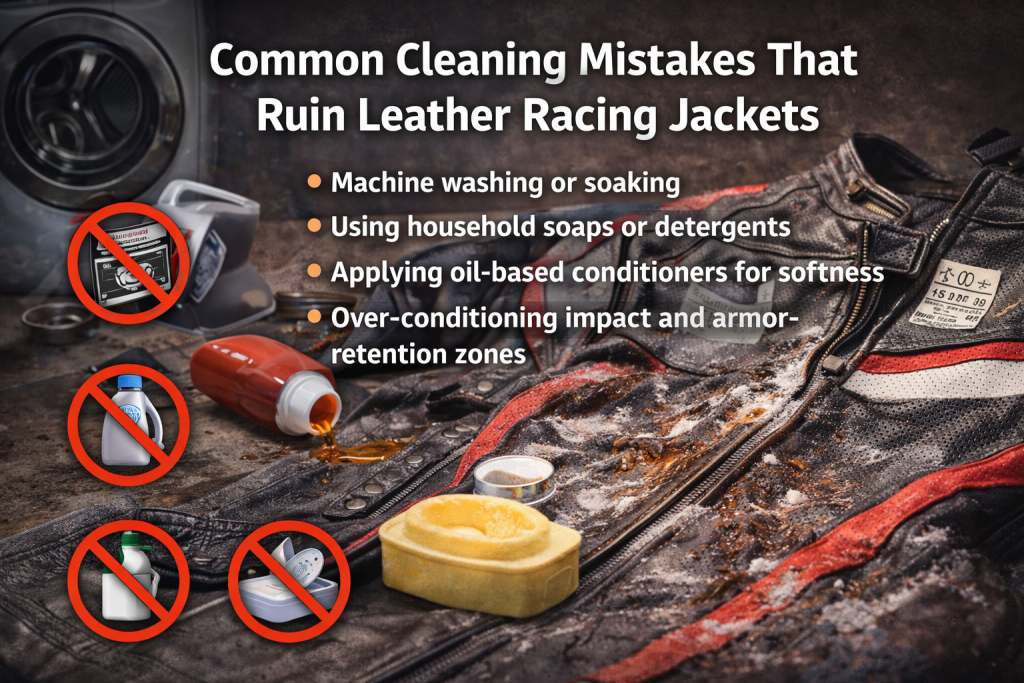
The most damaging mistakes include:
- Machine washing or soaking
- Using household soaps or detergents
- Applying oil-based conditioners for softness
- Over-conditioning impact and armor-retention zones
These practices permanently alter panel geometry and reduce protective reliability, even if cosmetic damage is not immediately visible.
Storage Best Practices After Cleaning and Conditioning
Proper storage maintains material equilibrium rather than appearance. Store the jacket in a dry, temperature-stable environment with moderate humidity. Use a wide hanger to support shoulder structure and avoid plastic garment covers that trap moisture and restrict airflow.
When Professional Leather Service Is Necessary
Professional service is required after chemical exposure, mold development, crash involvement, or when stiffness and cracking persist despite correct care. Cosmetic refinishing addresses appearance only; structural restoration evaluates material fatigue and load-bearing integrity. These are not interchangeable services.
Manufacturer Care Standards and Warranty Considerations
Care guidelines are based on material testing and certification requirements, including EN 1621 standards. Deviating from approved methods can compromise validated performance and warranty coverage. Documented, compliant care preserves both safety expectations and long-term reliability.
Final Guidance: Preserving Safety, Fit, and Performance Over Time
Maintenance is part of the jacket’s safety system. Cleaning and conditioning must preserve structural behavior, maintain fit stability, and support tested performance characteristics. When care decisions are guided by material science rather than appearance, the jacket continues to function as intended throughout its service life.