
Blog
What Safety Features Are Used in Motorcycle Leather Racing Jackets?

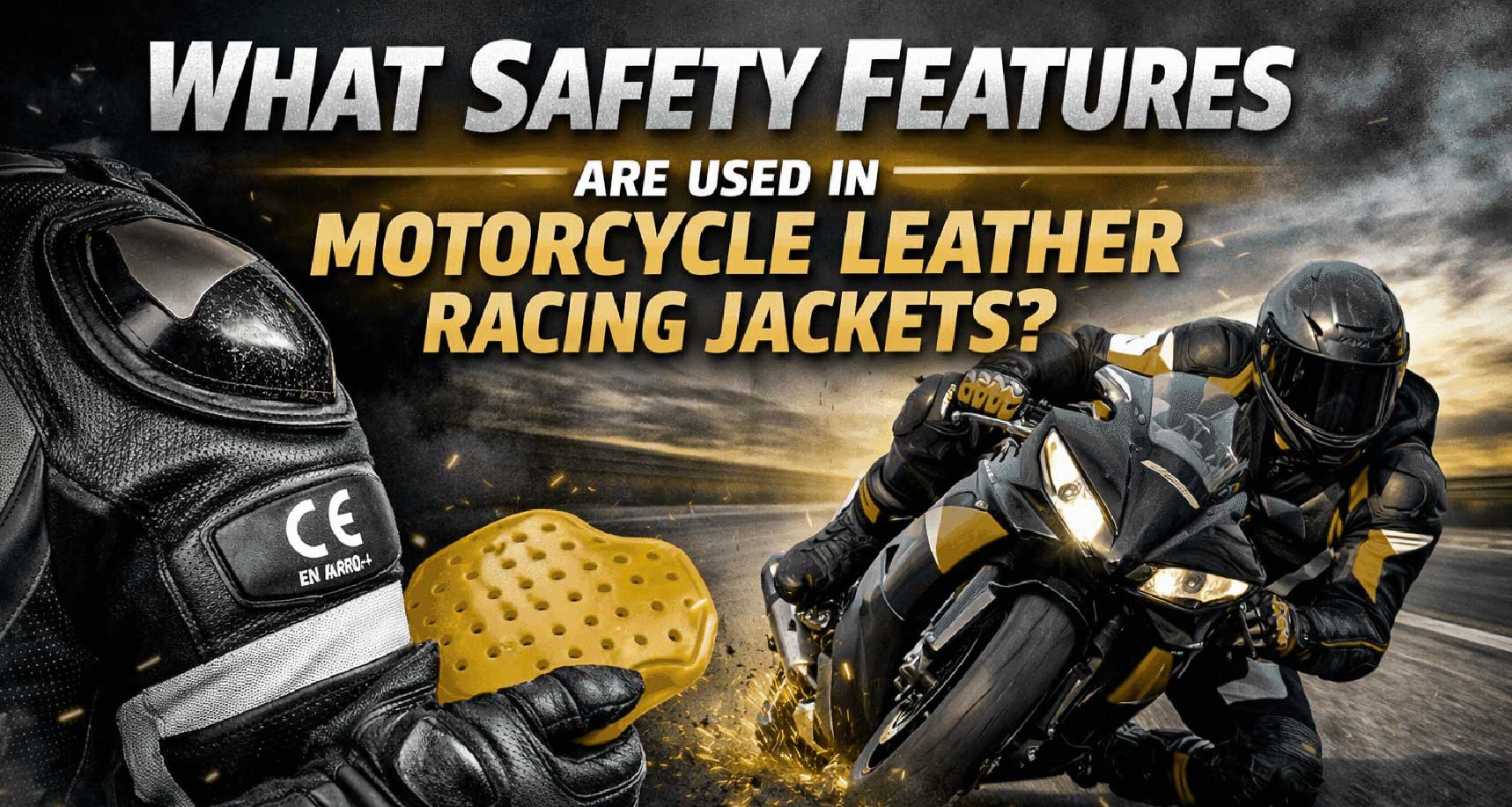
Motorcycle riding exposes the body to significant physical risk, particularly in high-speed environments where abrasion, impact, and sliding forces are common. A properly engineered leather racing jacket is designed to function as a critical layer of Motorcycle PPE, reducing injury severity through material strength, structural integrity, and integrated protection systems.
Modern racing jackets are no longer simple garments; they are technical safety equipment built in accordance with safety compliance standards used across professional motorsport and road riding industries. The use of certified components, controlled manufacturing processes, and performance-tested materials ensures that each jacket performs under real-world crash conditions.
As a manufacturer, our approach focuses on combining abrasion resistance, controlled impact absorption, and rider-focused design. Every component—from leather selection to armor placement—is chosen to deliver measurable protection rather than aesthetic value alone.
Why Safety Features Matter in Motorcycle Racing Jackets
Motorcycle accidents typically involve multiple types of physical stress acting simultaneously on the rider’s body. Understanding these risks explains why specialized protective construction is necessary.
Common Injury Risks in Motorcycle Riding
The most frequent injury types include:
- Surface-level damage caused by high-speed sliding friction
- Direct trauma from sudden impact with the road or obstacles
- Joint injuries due to uncontrolled movement during crashes
These risks are amplified when riders use non-certified or poorly constructed gear.
Role of Protective Gear in Reducing Risk
A professionally constructed racing jacket distributes and absorbs energy during impact while maintaining structural integrity during abrasion. Certified materials and reinforced construction prevent premature failure, ensuring that protection remains effective throughout the duration of a crash event.
Core Protective Materials Used in Our Leather Racing Jackets
Material selection is the foundation of any protective riding garment. The performance of a jacket depends heavily on the quality and processing of its outer shell and internal reinforcements.
Abrasion-Resistant Leather Construction
We utilize Full-grain leather and Top-grain leather, both selected for their density and durability. These materials provide superior resistance against tearing and surface wear when exposed to asphalt at speed. Thickness is controlled within industry-recommended ranges to balance flexibility with protective performance.
Reinforced Impact Zones
Critical areas such as shoulders, elbows, and the back are structurally reinforced to withstand repeated stress. These zones are engineered to support integrated armor while maintaining consistent coverage during rider movement.
Double & Triple Stitching Techniques
Seam failure is a common weak point in low-quality garments. To prevent this, we implement Double stitching and Triple stitching across all high-stress seams. This construction method significantly increases tear resistance and ensures that panels remain intact under load.
CE-Certified Armor: The Foundation of Impact Protection
Impact absorption is achieved through certified armor systems designed to reduce transmitted force to the body.
What CE Certification Means
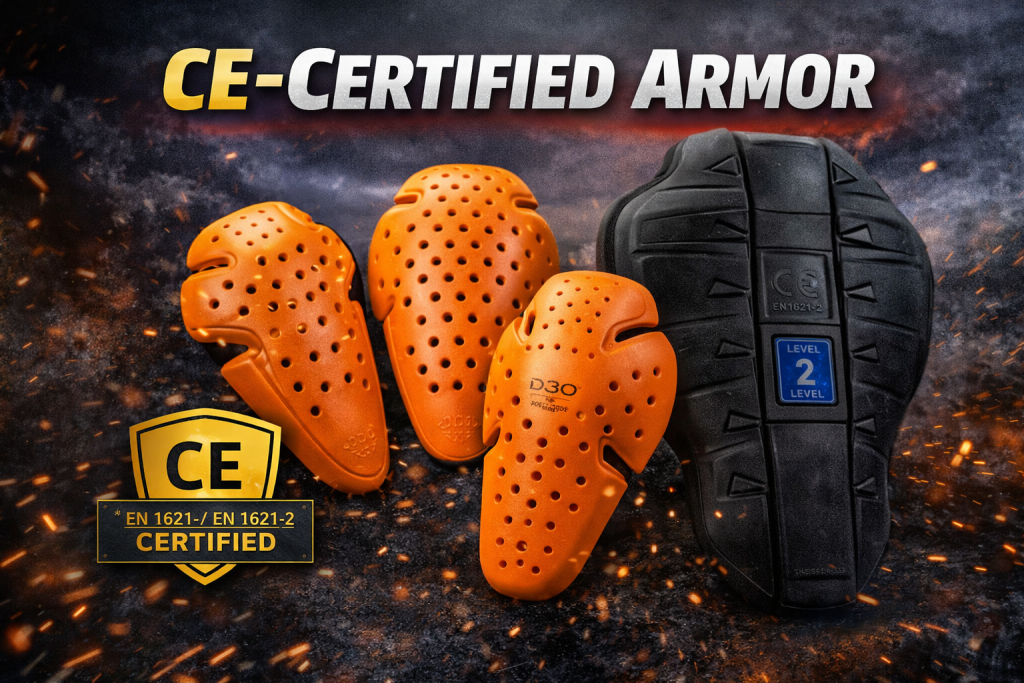
CE Certification ensures that protective components meet European safety benchmarks. Specifically, armor is tested under EN 1621-1 / EN 1621-2 protocols, which evaluate how effectively impact energy is absorbed and dispersed.
Types of Armor Used
Our jackets incorporate strategically positioned protection elements:
- Shoulder armor for lateral impact zones
- Elbow armor for joint protection during falls
- Integrated Back protector systems for spinal safety
Each component is selected based on coverage, flexibility, and performance under repeated impact.
Level 1 vs Level 2 Protection
Level 1 armor provides basic protection suitable for general riding conditions, while Level 2 offers higher impact absorption with reduced force transmission. Our designs accommodate both, depending on rider requirements and intended use.
Advanced Impact Protection Technologies We Use
Beyond standard armor systems, additional technologies are used to enhance real-world crash performance.
External Sliders (Shoulder/Elbow)
TPU sliders are installed on key contact points to reduce friction during sliding. These components help prevent sudden stops that can cause rotational injuries.
Memory Foam & Shock Absorption Layers
We integrate Memory foam armor layers to improve energy dispersion. These materials adapt to body contours while maintaining consistent impact resistance.
Ergonomic Safety Design for Rider Protection
Protection is only effective if it remains correctly positioned during movement. This is where Riding ergonomics becomes critical.
Pre-Curved Sleeves and Riding Position Fit
Sleeves are pre-shaped to match the natural riding posture, reducing material bunching and ensuring armor alignment.
Stretch Panels for Flexibility
Elasticized panels allow controlled movement without compromising structural integrity, particularly during aggressive riding positions.
Secure Fit Systems (Zippers, Closures)
Heavy-duty closures ensure that the jacket remains securely in place during impact, preventing exposure of vulnerable areas.
Ventilation and Thermal Safety Features
Thermal regulation plays a direct role in rider concentration and endurance.
Airflow Panels and Perforated Leather
Perforated leather sections are strategically placed to promote airflow without weakening the jacket’s structure.
Moisture Management Systems
An integrated ventilation system allows heat and moisture to dissipate, reducing fatigue and maintaining rider focus over long durations.
Visibility and Reflective Safety Enhancements
Visibility is a key factor in accident prevention, particularly in low-light conditions.
Reflective Panels
We incorporate Reflective panels to improve rider visibility to other road users without altering the jacket’s design integrity.
High-Visibility Design Elements
Subtle contrast elements are used to enhance detection without compromising the professional racing aesthetic.
Quality Control and Safety Testing Process
Consistency in safety performance requires strict manufacturing and testing protocols.
Material Testing Procedures
All raw materials are evaluated for tensile strength, abrasion tolerance, and structural consistency before production.
Impact Resistance Testing
Armor components are tested under controlled conditions to verify compliance with impact absorption requirements.
Manufacturing Quality Checks
Each jacket undergoes inspection at multiple production stages to ensure uniformity in stitching, panel alignment, and component integration.
How Our Safety Features Compare to Standard Motorcycle Jackets
Standard motorcycle jackets often prioritize cost over performance, resulting in reduced material quality and limited protection systems.
In contrast, our jackets are designed with:
- Certified armor integration rather than basic padding
- High-grade leather instead of synthetic substitutes
- Reinforced construction methods for durability
This results in significantly improved Impact protection and long-term reliability.
Choosing the Right Level of Protection for Your Riding Style
Selecting appropriate protection depends on how and where the jacket will be used.
Street Riding vs Track Riding
Street riders benefit from balanced protection and comfort, while track riders require maximum impact resistance and aerodynamic design.
Beginner vs Professional Riders
Beginners should prioritize comprehensive coverage and ease of use, while experienced riders may opt for advanced features tailored to performance riding.
Conclusion: Built for Maximum Protection and Rider Confidence
Motorcycle leather racing jackets are engineered safety systems, not casual apparel. From material selection to certified armor integration, every component contributes to reducing injury risk and improving rider confidence.
By combining tested materials, advanced protection technologies, and precise construction methods, our jackets are designed to perform under real-world conditions. This approach ensures that riders are equipped with gear that meets professional standards while supporting long-term safety and reliability.
What leather grade does MotoGPGears use in its racing jackets?
MotoGPGears uses full-grain and top-grain leather, combining maximum abrasion resistance with flexibility for rider comfort.
Are MotoGPGears jackets CE certified?
Yes, all jackets include CE-certified armor that meets EN 1621-1 and EN 1621-2 safety standards for impact protection.
What is the difference between D3O® and standard foam armor?
D3O® remains flexible but hardens on impact for better protection, while standard foam provides basic, non-adaptive shock absorption.
Does MotoGPGears use genuine Cordura® fabric or generic nylon?
MotoGPGears uses genuine Cordura® fabric in selected models, along with high-performance textiles based on design requirements.
How do I know which jacket material is right for my climate?
Choose perforated leather or textile for hot climates, standard leather for moderate weather, and thicker leather for cold conditions.
Are MotoGPGears jackets tested before shipping?
Yes, each jacket undergoes quality checks for stitching, armor placement, and overall construction before shipping.