
Blog
Professional Repair Methods for Scratched and Damaged Racing Jackets

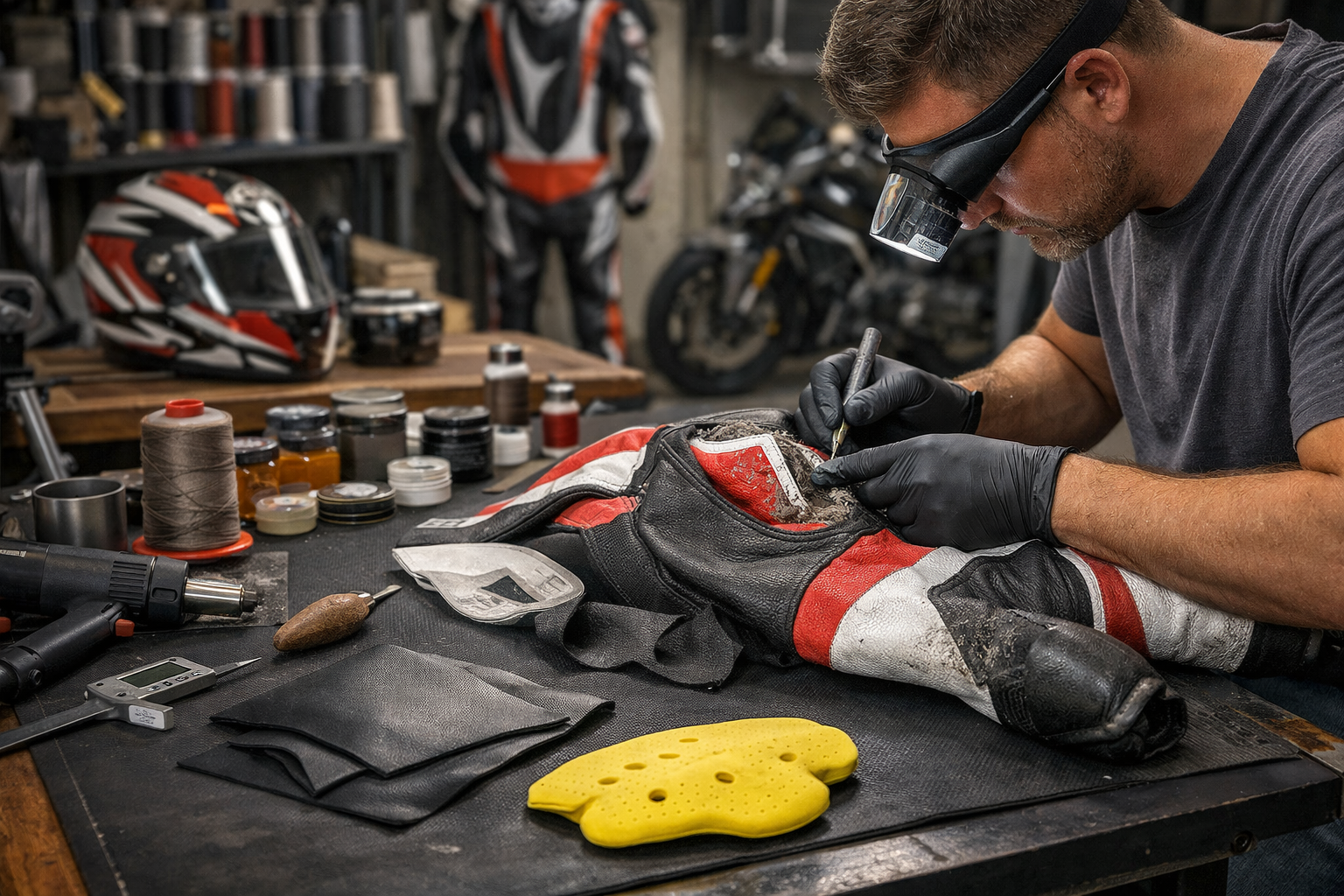
Racing leather jackets are engineered as protective systems designed to manage abrasion, impact, and torsional forces during a crash. Unlike casual riding gear, their construction assumes contact with asphalt at speed, repeated flex under load, and localized stress concentration at joints. When damage occurs, even if it appears superficial, the jacket’s ability to perform its protective role may already be reduced.
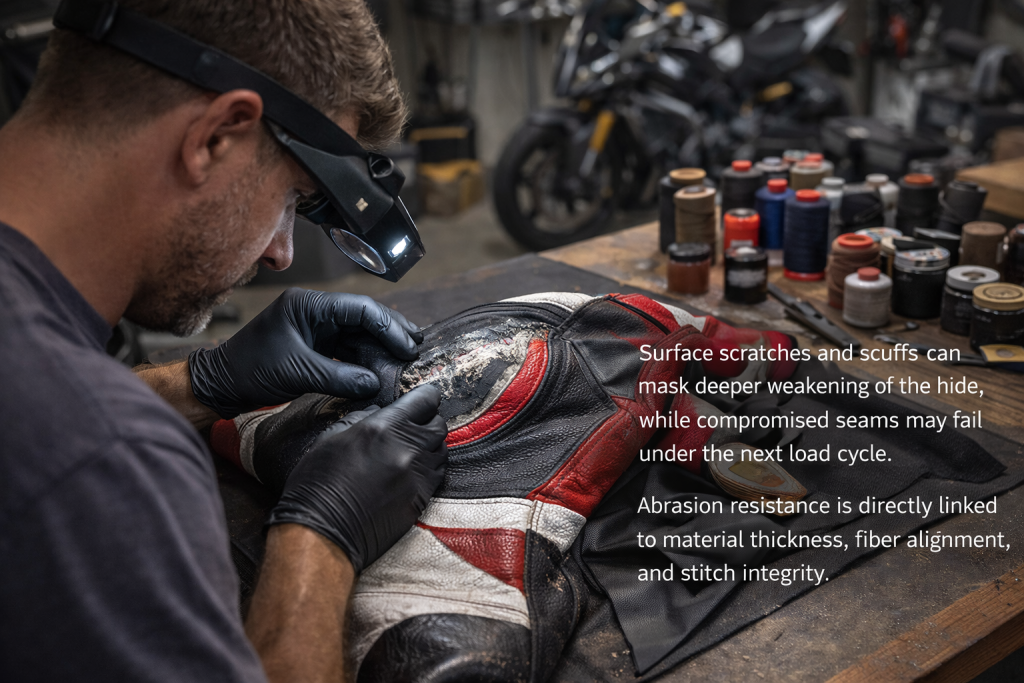
Surface scratches and scuffs can mask deeper weakening of the hide, while compromised seams may fail under the next load cycle. Abrasion resistance is directly linked to material thickness, fiber alignment, and stitch integrity. Once these parameters are altered, slide time and tear resistance change in ways that are not always visible to the rider. Professional repair exists to evaluate and address these risks, not to restore appearance alone.
Improper repairs—over-sanding, sealing pores with heavy coatings, or patching without load consideration—can further degrade performance. A race jacket that looks intact but has lost structural continuity offers false confidence. Professional intervention prioritizes preserving or restoring protective function, ensuring that any repair aligns with the jacket’s original safety intent rather than cosmetic expectations.
Understanding Racing Leather Construction Before Any Repair
Effective repair begins with understanding how racing jackets are built and why specific materials are chosen. Most race-grade jackets use full-grain leather because its intact fiber network provides superior abrasion resistance and controlled wear characteristics. The tanning and dyeing process matters as much as the hide itself; drum-dyed hides allow color to penetrate through the leather, ensuring that surface wear does not immediately expose untreated fibers.
Material selection varies by performance requirement. Kangaroo leather is often used in high-end applications due to its high tensile strength-to-weight ratio, allowing reduced bulk without sacrificing slide performance. Regardless of hide type, racing jackets are typically cut to a leather thickness (1.2–1.4 mm), balancing flexibility with abrasion duration. Deviations outside this range can affect both comfort and protection.
Panel layout, seam placement, and stretch integration are designed to distribute stress during a fall. Repairs that ignore these construction principles risk creating new failure points. Understanding how each panel contributes to load management is essential before any material is altered or replaced.
Types of Damage Found in Racing Jackets
Damage to racing jackets can present in several forms, each with different implications for safety and repairability. Superficial marks may coexist with deeper structural issues, making accurate classification essential.
- Abrasion burns occur when friction removes surface finish and generates heat, often glazing or hardening the leather.
- Fiber disruption is indicated by raised, fuzzy, or uneven areas where the internal structure has been compromised.
- A seam burst results when thread failure or stitch elongation allows panels to separate under load.
- Panel deformation can follow impact, leaving leather permanently stretched or misshapen.
Identifying which category applies helps determine whether restoration, reinforcement, or replacement is appropriate. Misjudging damage severity can lead to unsafe continued use.
Professional Assessment Process Used by Repair Specialists
Before repair work begins, a structured evaluation is performed to determine the jacket’s remaining service potential. This process goes beyond visual inspection. Leather fiber inspection is used to assess whether the internal structure has retained cohesion or suffered irreversible damage. Areas exposed to high friction or heat receive particular attention.
Quantitative checks follow, including thickness measurement to confirm that the hide still meets minimum performance thresholds after wear. Seams and load-bearing areas are examined through stress testing seams, applying controlled tension to reveal hidden weaknesses. Armor pockets, stretch panels, and liners are also evaluated for secondary damage that could affect fit or protection.
Only after this assessment can a repair strategy be defined. This ensures that any intervention supports the jacket’s protective role rather than masking underlying issues.
Repairing Scratched Leather Without Weakening the Hide
Scratches are often treated incorrectly, with aggressive sanding or heavy fillers that reduce leather strength. Professional repair focuses on preserving the grain structure, which governs abrasion resistance and flexibility. Material removal is kept to an absolute minimum, and only where damaged fibers cannot recover.
Where appropriate, fiber rehydration techniques are used to restore suppleness to stressed areas, allowing the leather to regain controlled flexibility without softening it excessively. Surface correction relies on controlled resurfacing, performed directionally to avoid cutting across fiber alignment. The goal is not to erase all marks but to stabilize the area so it wears predictably in future use.
This approach accepts that some visual imperfections may remain. Structural preservation takes precedence over cosmetic uniformity.
Abrasion Damage and Slide Repair Techniques
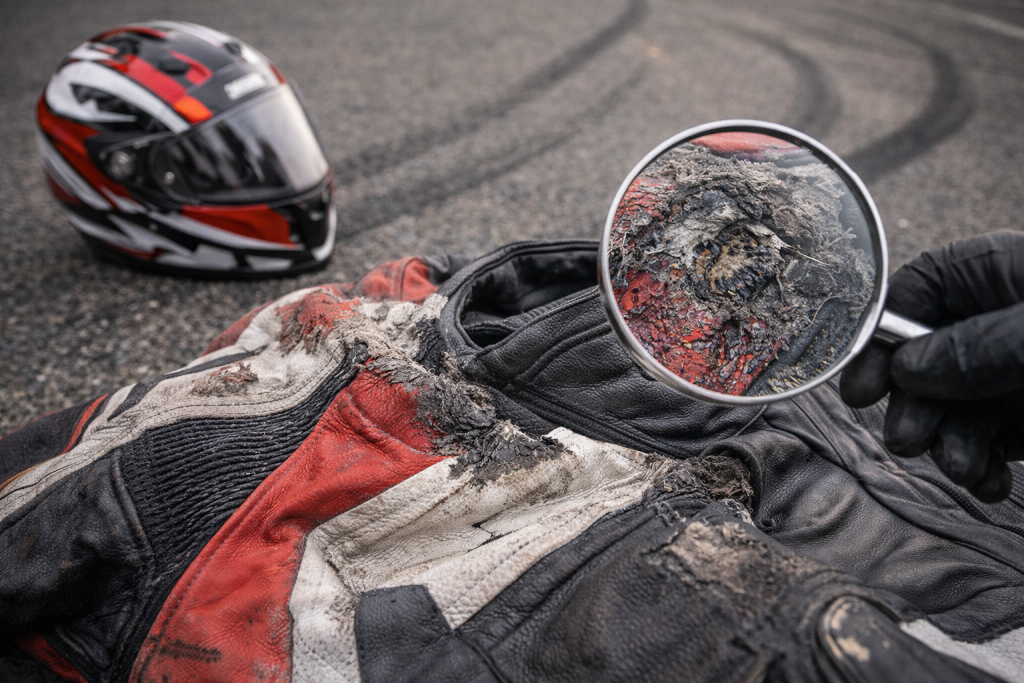
Damage from a slide introduces complexities beyond surface scratches. Evaluating abrasion depth is critical, as deeper wear may reduce remaining slide time below safe limits. Heat generated during contact can alter fiber behavior, particularly where friction heat has hardened or embrittled the leather.
In cases where surface layers are compromised but the panel retains sufficient thickness, internal stabilization may be possible through reverse-side reinforcement. This method supports weakened areas without introducing external stress risers. However, there are limits to what reinforcement can achieve. When abrasion has significantly thinned the hide or altered its mechanical properties, replacement becomes the safer option.
Professional repair acknowledges these limits openly. Not all slide damage can or should be corrected for continued race use.
Panel Replacement vs Panel Reinforcement: Making the Correct Call
Choosing between repair strategies requires balancing safety, fit, and long-term durability. Panel replacement is indicated when material loss or deformation compromises performance beyond acceptable thresholds. Replacement panels must match original characteristics, including stretch compatibility, to maintain ergonomic function.
Attention to grain orientation ensures that new material responds to stress in the same manner as the original, preventing uneven wear or unexpected tearing. Reinforcement may be appropriate for localized damage, but excessive layering can restrict movement and concentrate stress elsewhere. The correct decision prioritizes restoring uniform load distribution across the jacket rather than minimizing visible change.
Stitching and Seam Restoration in High-Impact Zones
Seams are critical to jacket integrity, especially in impact-prone areas. Safety seams are designed to fail in a controlled manner, dissipating energy without catastrophic panel separation. Restoring them requires replicating original construction methods rather than improvising.
Thread selection matters; bonded nylon thread is commonly used for its balance of strength and elasticity. Matching stitch length and pattern ensures that repaired seams behave predictably under load. Domestic sewing equipment cannot achieve the consistency or penetration required for race-grade seams, making professional machinery and technique essential.
Color Restoration Without Compromising Leather Performance
Color correction is often requested but must be approached cautiously. Effective restoration depends on dye penetration, which preserves breathability and flexibility. Surface coatings that sit atop the leather may create a uniform appearance but can seal pores, leading to breathability loss and accelerated material fatigue.
Professional recoloring aims to stabilize appearance without altering performance. In some cases, accepting slight color variation is preferable to introducing treatments that compromise function.
Restoring Armor Fit and Internal Structure After Impact
Impacts can displace or distort protective components even when external damage appears minimal. CE armor must sit correctly to provide intended coverage. Assessing armor pocket alignment ensures that protectors remain positioned during movement and impact.
Internal liners, attachment points, and stretch interfaces are evaluated and corrected as needed. Restoring these elements is essential for the jacket to function as an integrated protective system.
Post-Repair Structural Testing and Quality Control
After repairs, validation confirms that the jacket performs as intended. Articulation testing checks that mobility has not been compromised, while seam stress checks verify that repaired areas withstand expected loads. These steps ensure that the jacket can return to service with confidence, rather than relying on appearance alone.
When a Racing Jacket Should Not Be Repaired
Some conditions place a jacket beyond safe restoration. Heat-damaged leather may appear intact but lacks reliable strength. Widespread thinning or cumulative damage can result in structural compromise that no repair can fully correct. In such cases, retirement is the responsible choice, prioritizing rider safety over continued use.
Maintenance Practices That Extend Repair Longevity
Proper care supports the durability of professional repairs. Observing appropriate conditioning intervals helps maintain flexibility without oversoftening the leather. Minimizing storage stress by avoiding prolonged compression or hanging in distorted positions reduces long-term deformation. Regular inspection allows early identification of issues before they escalate.
Our Repair Philosophy as a Motorcycle Apparel Manufacturer
As a manufacturer, our approach to repair is grounded in responsibility to the rider. We prioritize material compatibility, construction accuracy, and safety outcomes over cosmetic perfection. Each repair decision is guided by how the jacket will perform under real riding conditions, respecting the limits of the original design and the realities of crash dynamics. Restoring function, not appearance, defines professional race leather repair.