
Blog
MotoGP Jacket Materials: Kevlar, Leather & Foam Explained

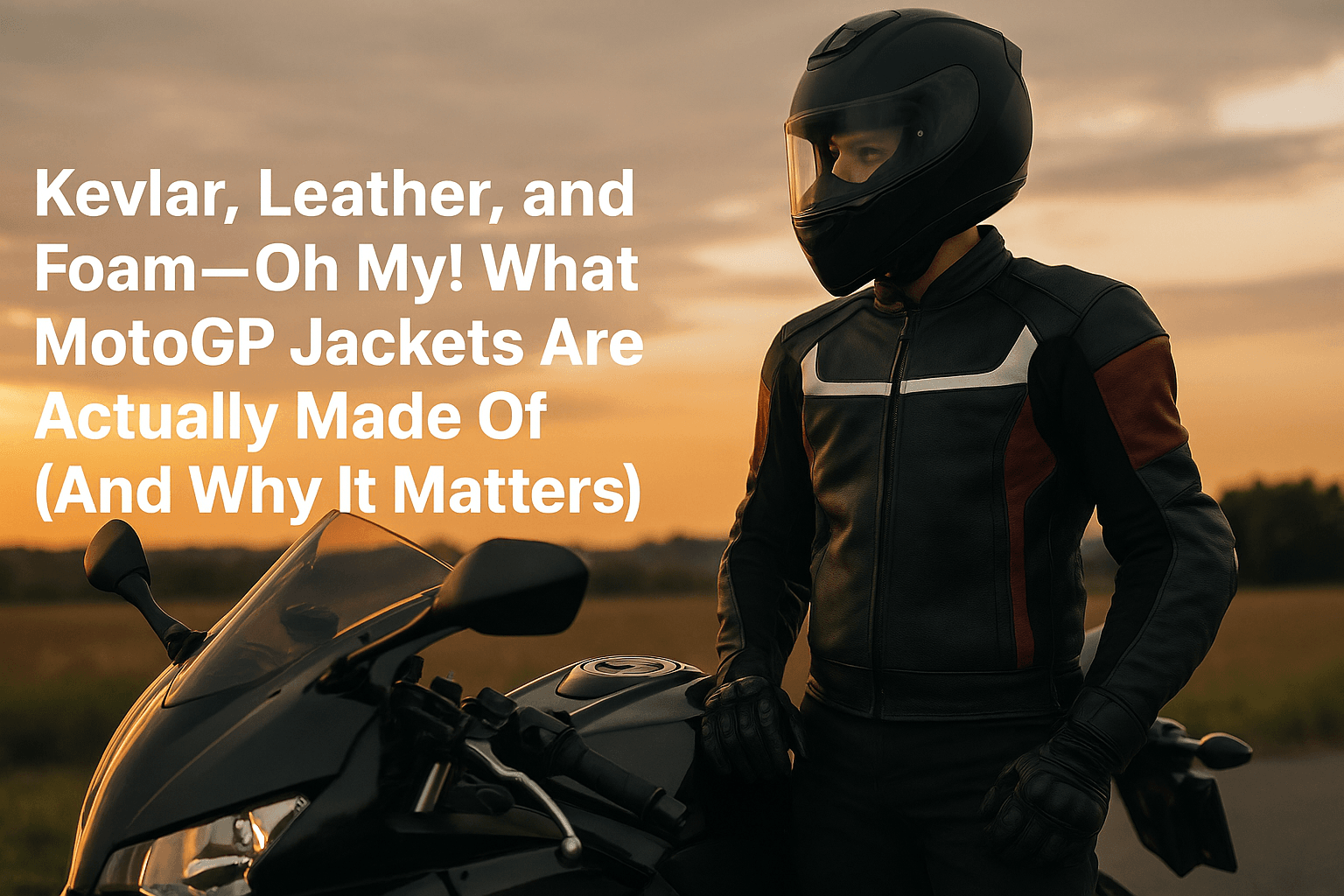
When it comes to MotoGP, safety is just as important as speed. The riders reach incredible velocities, often over 200 mph. At those speeds, even a minor crash can result in serious injury. That’s why understanding what MotoGP jackets are made of is essential—not only for racers but also for everyday riders. These high-performance garments are made from advanced materials. They include Kevlar, leather, and foam. But what do these materials actually do, and why do they matter so much?
Let’s explore the exciting world of motorcycle racing gear. We’ll look at the science behind protective clothing.
Why MotoGP Jacket Materials Matter
Your jacket is your second skin when riding. In a crash, it’s the first line of defense. Choosing the right motorcycle jacket components can be the difference between a scrape and a serious injury.
Key Purposes of Racing Jacket Materials:
- Impact protection in jackets
- Abrasion resistance materials to protect from sliding
- Temperature control in riding gear for comfort
- Ventilation in racing jackets to manage airflow
- Ergonomic motorcycle jackets for full range of motion
Let’s break down the most common materials you’ll find in MotoGP Gears and what each brings to the table.
Leather: The Classic Champion

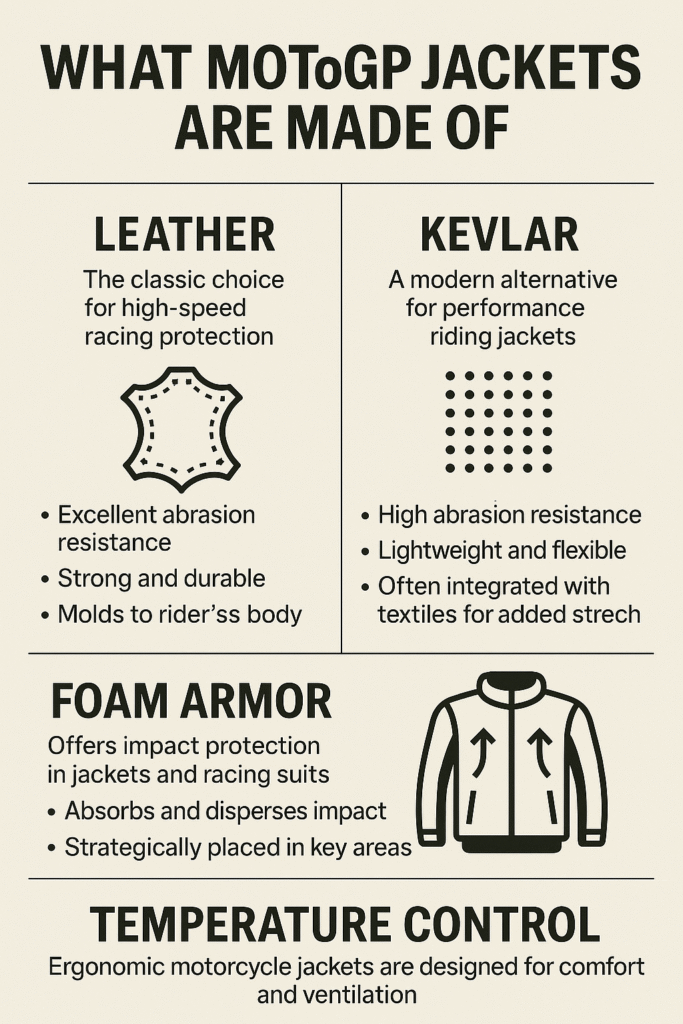
Leather, like cowhide or kangaroo, is the top choice for high-speed racing gear.
Benefits of Leather:
- Exceptional abrasion resistance materials
- Natural durability and flexibility
- Retains shape even after stress
- Good insulation and comfort
Downsides:
- Heavier than textiles
- Less breathable without perforations
- Can be stiff before break-in
Expert Opinion:
“Leather remains unmatched when it comes to slide protection. It’s what professional riders trust on the track.” — Mark Renner, MotoGP Safety Gear Analyst
When to Choose Leather:
- You’re riding at high speeds
- You want the most durable outer shell
- Racing or track days
Kevlar: The Modern Marvel
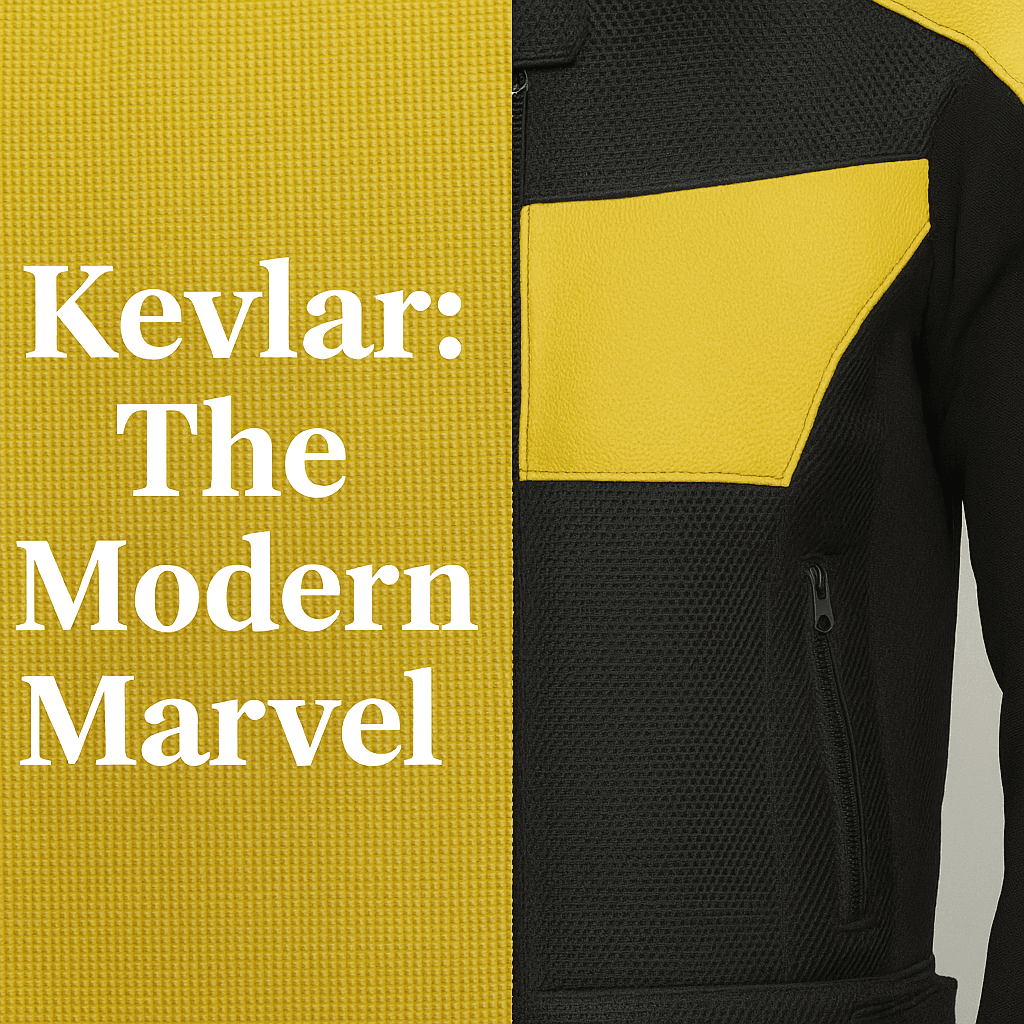
Kevlar is a synthetic fiber originally used in body armor. Now it’s a core component in motorcycle safety materials.
Features of Kevlar:
- Extremely high tensile strength
- Lightweight and flexible
- Excellent heat resistance
Applications in MotoGP Jackets:
- Reinforced lining in high-impact zones
- Used in combination with other materials
- Often paired with Cordura for abrasion resistance
Personal Experience: I once slid across asphalt wearing a hybrid Kevlar-leather jacket. Despite the fall, I walked away with minimal injuries. The Kevlar panels absorbed much of the friction and heat.
Foam: The Invisible Guardian

Foam doesn’t look like much, but it plays a huge role in motorcycle crash protection.
Types of Foam Used:
- Memory foam
- EVA foam
- D3O impact foam (a smart material that hardens on impact)
Benefits:
- Lightweight shock absorption
- Flexible for comfort
- Can be CE-rated for safety
CE-rated motorcycle gear means it meets European safety standards, which are among the toughest in the world.
Composite Armor: The Best of All Worlds
MotoGP jackets use racing suit armor that blends leather, Kevlar, foam, and sometimes carbon or plastic shells.
Common Armor Placements:
- Shoulders
- Elbows
- Spine
- Chest (in some models)
These protect the most impact-prone areas. It’s a design that puts rider safety gear design front and center.
Textile vs Leather: What’s Right for You?
Textile vs leather motorcycle gear has been a hot debate among riders.
FeatureLeather JacketsTextile JacketsAbrasion ResistanceHighModerate to High (with Kevlar)BreathabilityModerateHighWeather ProtectionLow (unless treated)High (waterproof liners)WeightHeavyLightComfortBreak-in neededComfortable out-of-box
If you ride daily in various weather conditions, a textile jacket with Kevlar reinforcements might be the better pick. But for the track, leather wins.
Temperature & Ventilation: Not Just About Safety
Racing at high speeds generates a lot of body heat. That’s why temperature control in riding gear and ventilation in racing jackets are crucial.
Key Features to Look For:
- Perforated leather panels
- Zippered vents
- Moisture-wicking linings
- Removable thermal liners
These ensure that the rider stays cool and dry, which can impact concentration and performance.
Ergonomics and Fit: Designed for Performance
Ergonomic motorcycle jackets are cut for the riding position. MotoGP jackets include features like:
- Pre-curved arms
- Accordion stretch panels
- Adjustable waist and cuffs
- Race humps for aerodynamics
These design elements help reduce fatigue and improve performance on the bike.
Do Pros and Regular Riders Wear the Same Gear?
Do MotoGP riders use the same gear as regular bikers? Not exactly. Pro riders wear custom-fitted suits. These suits have built-in airbags, ultra-lightweight composites, and features made for specific tracks. The materials and technology are similar, but the upgrades set them apart.
Many brands, such as Motogp Gears, provide consumer versions inspired by pro gear. This makes high-performance riding jackets available for everyday riders.
Final Thoughts: What’s the Best Material?
So, which material offers the best protection in a crash—Kevlar or leather?
Both offer superior protection, but they serve different purposes:
- Leather excels at abrasion resistance.
- Kevlar offers flexibility and heat resistance.
- Foam and armor protect against impacts.
MotoGP gear safety features combine all these materials to deliver the best of each.
Conclusion
MotoGP jackets aren’t just stylish. They combine smart motorcycle jacket parts designed for safety, comfort, and performance. Brands like Motogp Gears bring pro-level materials to everyday riders. When you commute or race, good gear matters. High-quality, CE-rated motorcycle gear with Kevlar reinforcements and proper ventilation can really help.
So next time you’re shopping for rider safety gear design, remember: it’s not just a jacket. It’s your armor.
FAQs
What are MotoGP jackets actually made of?
MotoGP jackets are made from leather, Kevlar, foam, and advanced synthetic materials. These provide impact protection, abrasion resistance, and ergonomic comfort.
Is Kevlar really used in motorcycle jackets?
Yes, Kevlar is used in high-impact areas of many motorcycle jackets due to its high tensile strength and heat resistance.
Why do MotoGP jackets use foam?
Foam provides impact protection by absorbing and dispersing the force from crashes. It’s used in armor around shoulders, elbows, and spine.
Is leather still the safest material for racing jackets?
Leather is highly abrasion-resistant, making it a top choice for racing. It remains a preferred material in MotoGP for outer shell construction.
What’s the difference between Kevlar and Cordura in bike jackets?
Kevlar is stronger and more heat-resistant. Cordura is durable nylon, often used in textiles. Some jackets use both for balanced protection.
How protective is the foam in MotoGP gear?
CE-rated foam in MotoGP gear absorbs impacts well. It helps reduce injuries during crashes.
Which material offers the best protection in a crash—Kevlar or leather?
Leather is better for abrasion resistance, while Kevlar provides flexibility and heat resistance. Together, they offer comprehensive protection.
Do MotoGP riders use the same gear as regular bikers?
Pro riders wear custom-fitted suits with advanced features. However, similar technologies and materials are used in high-end consumer jackets.
How effective is armor padding in MotoGP jackets?
Armor padding is very effective when properly placed and CE-rated. It protects joints and vital areas from direct impact during a crash.